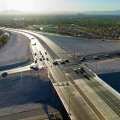
The most dangerous cities for pedestrians are communities where crossing the street or walking along a familiar sidewalk can carry far more risk than it should. In many places across the United States, pedestrian collisions continue to rise year after year, reflecting a troubling reality for people who travel on foot. Busy intersections, wide roadways, speeding traffic and aging infrastructure are only part of the problem. In some cities the danger is compounded by population density, limited safety enforcement, a lack of protected crossings, and streets that simply were not designed with walkers in mind.
Cities With High Pedestrian Risk
Among the places with the highest rates of pedestrian accidents are several smaller urban environments as well as large metro areas. Cities like Hempstead in New York and Hingham in Massachusetts have seen strikingly high pedestrian accident numbers relative to population size. The pattern continues in places such as Decatur in Georgia, Stanton and Barstow in California and Gallup in New Mexico.
These communities share a combination of tight streets and heavy vehicle flow that can make walking a perilous daily activity. High traffic corridors often cut through retail zones, residential areas, or transit connections and many pedestrians must cross several lanes of moving traffic before reaching a sidewalk on the opposite side.
Why Some Cities Are More Dangerous
Several factors repeatedly appear in cities with high pedestrian injury rates. Wide multilane roads encourage cars to travel at speeds that leave pedestrians vulnerable during even a brief misstep. Poor visibility at night or in bad weather makes it harder for drivers to see people who are crossing at unlit intersections.
In many older cities, sidewalks and crosswalks were built long before current traffic volumes existed so infrastructure has not kept pace with growth. Another element is driver behavior. Distracted driving remains one of the most persistent threats to those who walk. A single driver glancing at a phone while approaching a crosswalk can turn a moment of negligence into a life altering event.
A Worrying Trend of Increases
While some cities remain consistently dangerous, others are experiencing sharp increases without much warning. Lincoln, Nebraska has seen annual pedestrian accident totals jump at an alarming rate, suggesting major changes in traffic patterns, population growth or road use. Brownsville, Texas, Springfield, Massachusetts and Augusta, Georgia have also reported large spikes in pedestrian incidents.
When a city experiences a rapid surge it often indicates that local streets are being stressed in new ways. More commuters, more commercial activity or new roadway design can all contribute to sudden risk elevation.
Progress is Possible
Not every city is moving in the wrong direction. Several communities have implemented safety upgrades that significantly reduced accidents over short periods of time. Improvements like pedestrian refuge islands, extended crossing times, traffic calming measures and clearly painted crosswalks show measurable results. Cities that reduce danger for walkers typically combine multiple strategies over time rather than relying on a single solution.
Conclusion
Pedestrian safety is not a luxury but a necessary condition for a healthy and accessible city. The communities ranked among the most dangerous are reminders of what can happen when infrastructure, planning and enforcement fail to protect the people who use the streets most vulnerably. Yet the cities making progress demonstrate that change is possible when pedestrian needs are taken seriously.